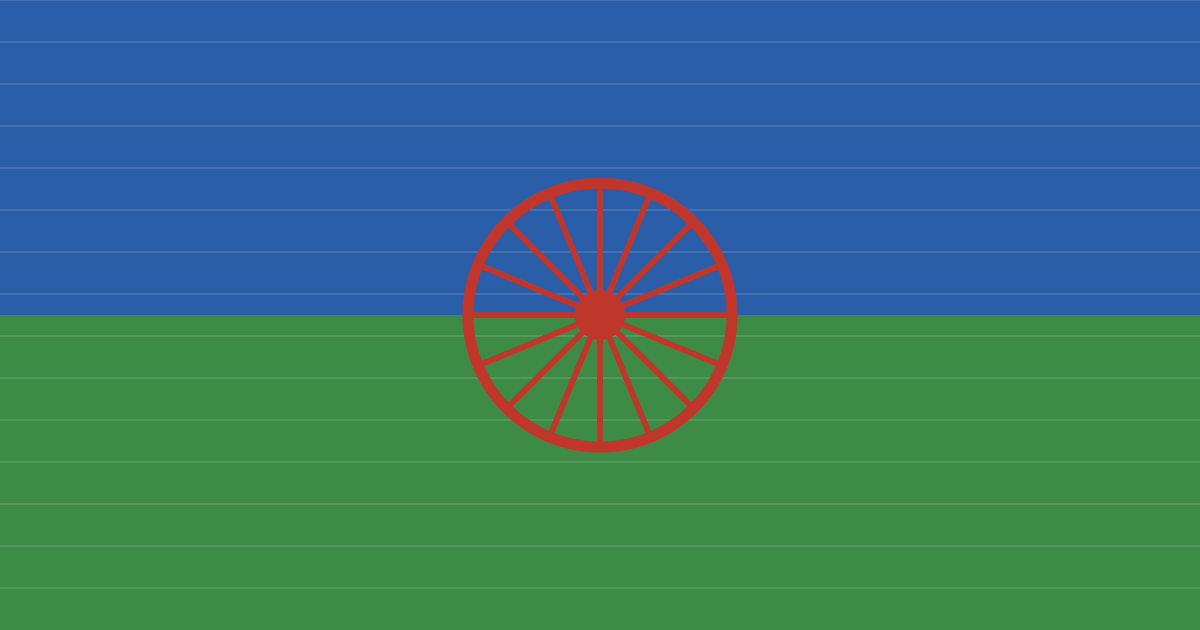
 ROMANIYA
What “Romaniya” means
The site is named after an idea rather than a place, and the idea is older than any of us.

People ask why the site is called Romaniya, and usually expect the answer to be a country. It is not. There is no Roma nation with a border, and there never has been. The name comes from something else entirely.
Romanipen
In Romani there is a word: romanipen, and in some dialects romanipe, romanimos, or romaniya. It does not translate into one English word. The closest anyone gets is "Roma-ness": the whole of what it is to be Roma. Not the paperwork and not the bloodline, but the manner of it. How you treat your elders. What you owe your family. What is clean and what is not. How you settle an argument without letting it become a feud. What you do when a stranger who is one of ours turns up at your door.
It covers law, custom, spirit and conduct at once, and it is carried in people rather than written anywhere. That is why it survived. A book can be burned and an archive can be seized, but something that lives in how a family behaves at a wedding is very difficult to take away.
Why it makes a good name for this
A social network is a strange thing to name after a moral idea. But the thing this site is for is not really the posting. It is the part underneath: keeping hold of each other across borders that were drawn without us, in countries that mostly did not want us, in a century where the young people are scattered further than any generation before them.
Half the Roma under twenty-five now live somewhere their grandparents never saw. That is not a tragedy on its own. People have always moved, and we have moved more than most. What is new is how easily the thread breaks when the distance is that great. Romanipen was always passed down by proximity: you learned it by being in the room. When the rooms are in six countries, something has to stand in for the room.
That is the whole ambition here. Not to replace any of it, because nothing on a screen replaces a kitchen table, but to make the distance survivable.
A note on the other word
You will see our people called something else in most European languages: gypsy in English, cigány, tsigane, zigeuner, цыгане. Those words came from outside. Most of them descend from a Greek term meaning "untouchable", and they were the words used on the orders, the registers and the transport lists.
Some Roma use them comfortably. Many do not. The word we have for ourselves is Rom, meaning a man, a husband, one of ours, and Roma for the people. Romani for the language and the adjective. It is not a matter of politeness. It is the difference between what you are called and what you are.
This site uses our own word throughout, including in the translations, which is not something translation software does on its own. That was a deliberate piece of work, and it is why the name at the top of the page is the one it is.