 ROMANIYA
The flag and the wheel
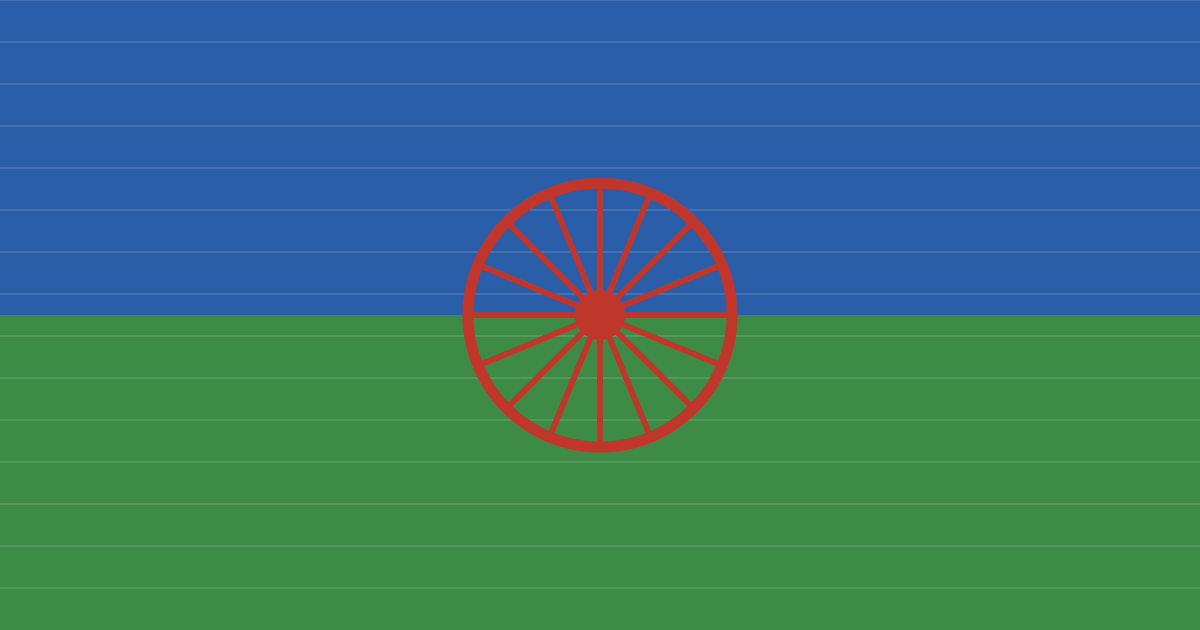
Green field, blue sky, and a red wheel in the middle. Every part of it was chosen, in a room, on a specific afternoon in 1971.
Most flags are older than anyone can properly account for. Ours is not. It was adopted on the 8th of April 1971, at the first World Romani Congress, in Orpington outside London, by delegates from fourteen countries who had travelled there largely at their own expense to argue about exactly this sort of thing.
What the parts mean
The bottom half is green: the earth, the fields, the ground people actually stood on. The top half is blue: the sky over it, the same sky in every country. Between them, in the centre, is a red chakra — a sixteen-spoked wheel.
The wheel is the part that carries the most. It is a cart wheel, plainly: the wagon, the road, a people who moved. But it is also deliberately the chakra of the Indian flag, and that is the argument the flag is making. Romani is an Indic language. It left north-west India somewhere around a thousand years ago, and the grammar has never stopped saying so. The wheel is a claim about where we came from, put on a flag by people who were tired of being told they came from Egypt.
Red for the blood, most say. Some of the delegates meant it more specifically than that.
The 8th of April
The same congress fixed the date as International Roma Day, and it is marked now in most of Europe, sometimes officially and more often by us. The customary thing is to throw flower petals into a river and let them go, for the people who did not come back.
That congress did three other things that mattered more than they sounded at the time. It settled on Roma as the name we would use for ourselves in international dealings. It adopted Gelem, Gelem as the anthem, a song written by Žarko Jovanović about a convoy on a road, which anybody who knows what happened between 1939 and 1945 will hear correctly the first time. And it agreed we would stop asking to be recognised as a problem to be managed, and start asking to be recognised as a people.
Where you will see it
On houses in Slovakia and Romania. At weddings. On the jacket of somebody in Manchester whose family has not been on a road in four generations. Painted on a wall in a settlement that has no legal address. It travels well, which is appropriate.
It is not a national flag, because there is no nation to be the flag of. It is something less common than that: a flag for a people who are spread across every country and belong to a great many of them at once.